

When most people start dreaming of a Fiji vacation, their mental mood board is filled with images of overwater bungalows, turquoise lagoons or a cold tropical drink with a tiny umbrella. And look, I get it. I’ve But you have to step away from the international “chicken burger” menu and follow your nose toward the scent of toasted cumin, fresh turmeric, and simmering coconut milk.
I’m talking about Indo-Fijian cuisine. Yum!
It’s a story of resilience, adaptation, and two very different cultures falling in love over a shared cooking pot. If you haven’t sat down to a proper Fijian curry or a stack of fresh rotis, you haven’t truly tasted Fiji yet. In Fiji, roti is more popular than puri.
A History Written in Spices
To understand why the food here tastes the way it does, we have to look back to the late 1800s. Between 1879 and 1916, over 60,000 people from India were brought to Fiji as indentured laborers to work on the burgeoning sugarcane plantations. They brought with them small bundles of spices, traditional techniques, and a deep-seated longing for the flavors of home.
But here’s the thing: Fiji isn’t India. The soil is different, the climate is different, and the ingredients available were wildly different. There was no ghee, no vast variety of dals, and certainly no traditional clay ovens in the middle of the cane fields.
What happened next was a beautiful, organic “gastronomic collision.” The Indian settlers began swapping techniques with the indigenous iTaukei people. They traded spices for local staples like taro (dalo), cassava, and fresh seafood. The result? A fusion cuisine that you won’t find in New Delhi or London or New York. It belongs solely to these islands.
The “Holy Trinity” of Indo-Fijian Flavor
If you’re looking to identify the “Indo-Fijian thumbprint,” you’ll find it in three specific areas:
1. The Coconut Revolution. In India, many curries (especially in the north) rely on cream or yogurt for richness. In Fiji, the coconut is king obtained fresh from the ‘tree of life’. Indo-Fijian curries often use freshly squeezed coconut milk, which adds a silky, tropical sweetness that cuts right through the heat of the chilies.
2. The Fire of the “Bongo” Chili. Fijian chilies, specifically the “Bongo” chili, are legendarily spicy. They are small, incredibly spicy, and have a fruity undertone. Indo-Fijian cooking isn’t just about “heat”, it’s about a slow, creeping warmth that makes your forehead bead with sweat while your taste buds beg for another bite.

3. The Earthy Root Crops. Instead of just serving curry with basmati rice, you’ll often see it paired with boiled cassava or dalo. These dense, earthy root vegetables act like a sponge, soaking up the spiced gravy in a way that rice simply can’t match.
The Dishes You Have to Try (And Where to Find Them)
If you’re walking through the streets of Nadi or Suva, keep your eyes peeled for small, unassuming canteens” or Curry Houses.
The Fiji Fish Suruwa
This is the ultimate fusion dish. It’s a traditional fish curry, but it’s lighter and more fragrant than what you might expect. They use local reef fish, simmered with mustard seeds, curry leaves, and heaps of fresh coconut milk. It’s often garnished with fresh coriander that has grown under the intense Pacific sun, giving it a punchier flavor than the grocery store variety. Scroll below for recipe.

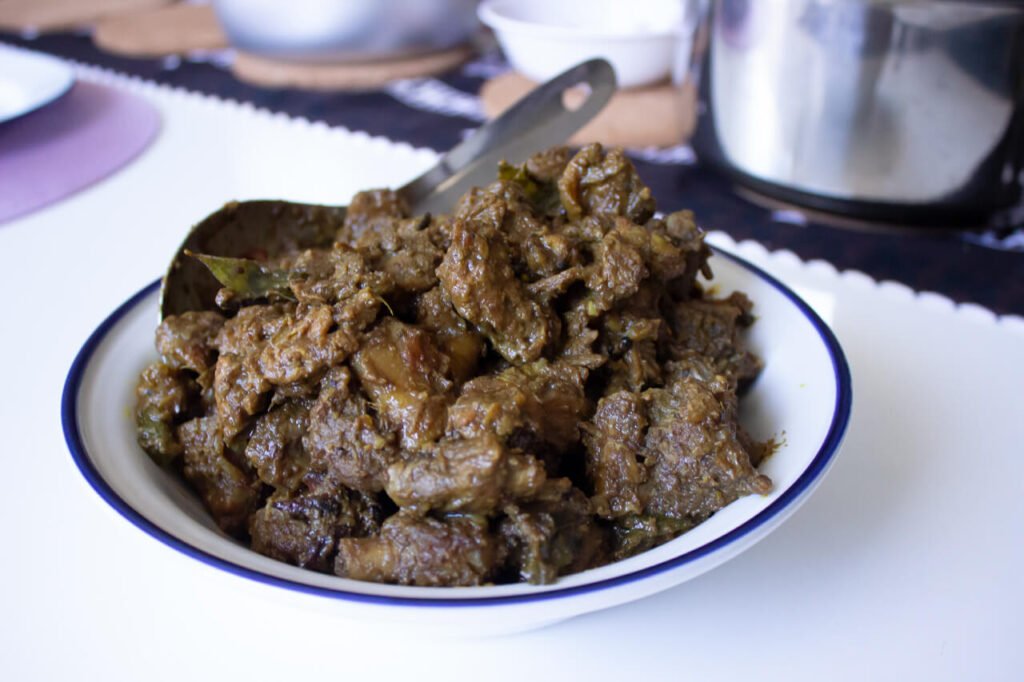
Duck Curry
In Fiji, duck curry is the gold standard for a celebration. It’s a “dryer” curry, meaning the spices are fried until they form a thick, intense paste that coats the meat. It’s rich, gamey, and best eaten with your hands using a piece of warm, buttery roti.
Lovo-Style Spices
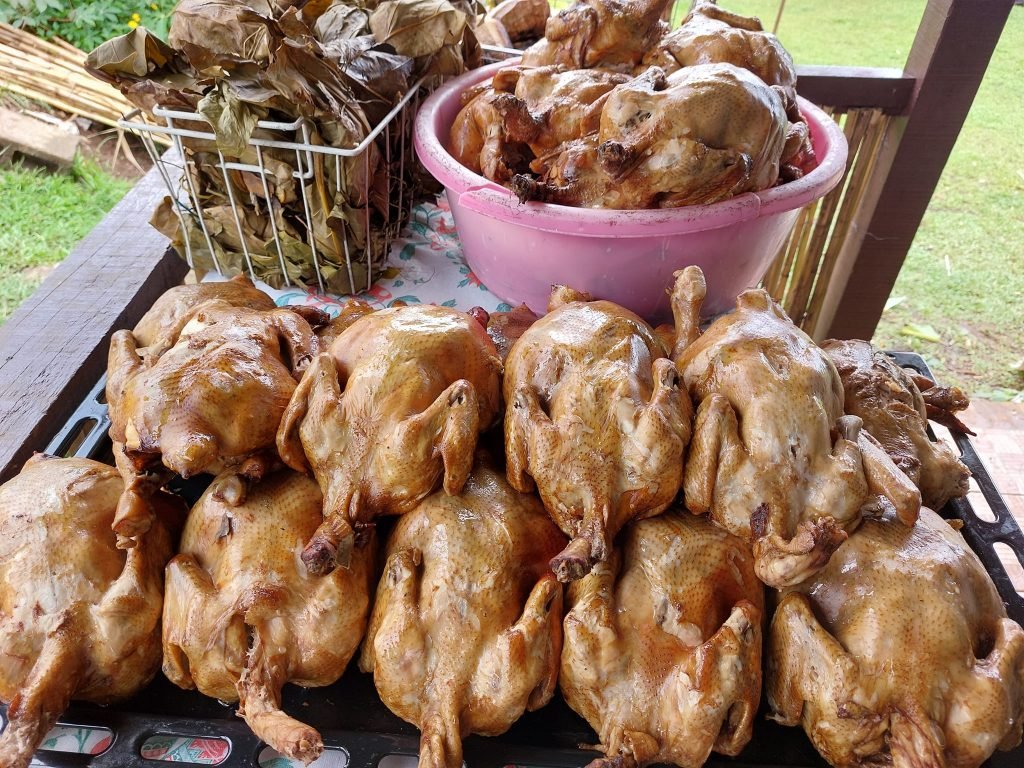
One of the coolest things I saw was the crossover of the Lovo (the traditional Fijian earth oven). You’ll sometimes find meats that have been marinated in Indian spices—garlic, ginger, cumin—and then wrapped in banana leaves and buried in the hot stones of an earth oven. It’s smoky, spicy, and incredibly tender.
Fiji Fish Suruwa Recipe
Servings: 4 servings
Ingredients
3 tablespoons vegetable oil
1 onion diced
1 cinnamon stick
3 cloves garlic minced
2 long red chilies
1 1/2 teaspoons garam masala
1 teaspoon ground toasted cumin
1 teaspoon ground turmeric
2 medium tomatoes finely diced
1 1/2 pounds (680 grams) firm white fish
Juice of 1 lemon
1 2/3 cups (400 ml) coconut milk
Salt to taste
Freshly chopped cilantro for garnish
Steamed white rice for serving
Instructions
In a large skillet, drizzle oil over medium heat. Once heated, add the onion and cinnamon stick. Cook until the onion begins to soften, then mix in the garlic and chilies. Cook until just fragrant and stir in the garam masala, cumin, and turmeric.
Once fragrant, add the tomatoes and cook, stirring occasionally, until the tomatoes start to break down, about 15 minutes. Push in the fish pieces around the tomato mixture to the bottom of the pan and drizzle the lemon juice over the top. Cook for a couple of minutes and flip the fish to the other side. Gently mix in the coconut milk and simmer just until the fish is cooked through, about 5 minutes.
Season to taste with salt and serve immediately with rice and topped with cilantro.
Enjoy!